Somewhere between comfort and cost, a quiet little device is changing the maths.
Across Europe and the US, more households are turning to a small control box that tells the water heater exactly when to work, and when to stop wasting power. It doesn’t cool your water, and it doesn’t shrink your shower time – it simply stops the heater running when nobody needs it.
Why your water heater is eating your electricity budget
In most homes, the water heater is one of the top three power-hungry appliances, alongside electric heating and tumble dryers. The reason is simple: it spends hours every day maintaining hot water at a set temperature, even when nobody is showering, washing up or doing laundry.
Traditional electric tanks keep a large volume of water hot all the time. Each time the temperature drops a few degrees, the heating element kicks in again. That “standby” heating can quietly add a lot to your bill.
For many households, the tank’s biggest cost is not heating water you use, but reheating water you don’t.
Most electric water heaters only offer a basic choice of modes:
- Continuous mode: the heater maintains the set temperature 24/7, regardless of your real needs.
- Timed or off-peak mode: the heater runs during pre-set cheaper hours, if your utility offers them.
- Off mode: power is cut completely, which quickly becomes unrealistic for daily life.
This built-in control is often too crude. It assumes your routine never changes, and it leaves the heater in charge rather than you.
The small box that changes everything: an external programmer
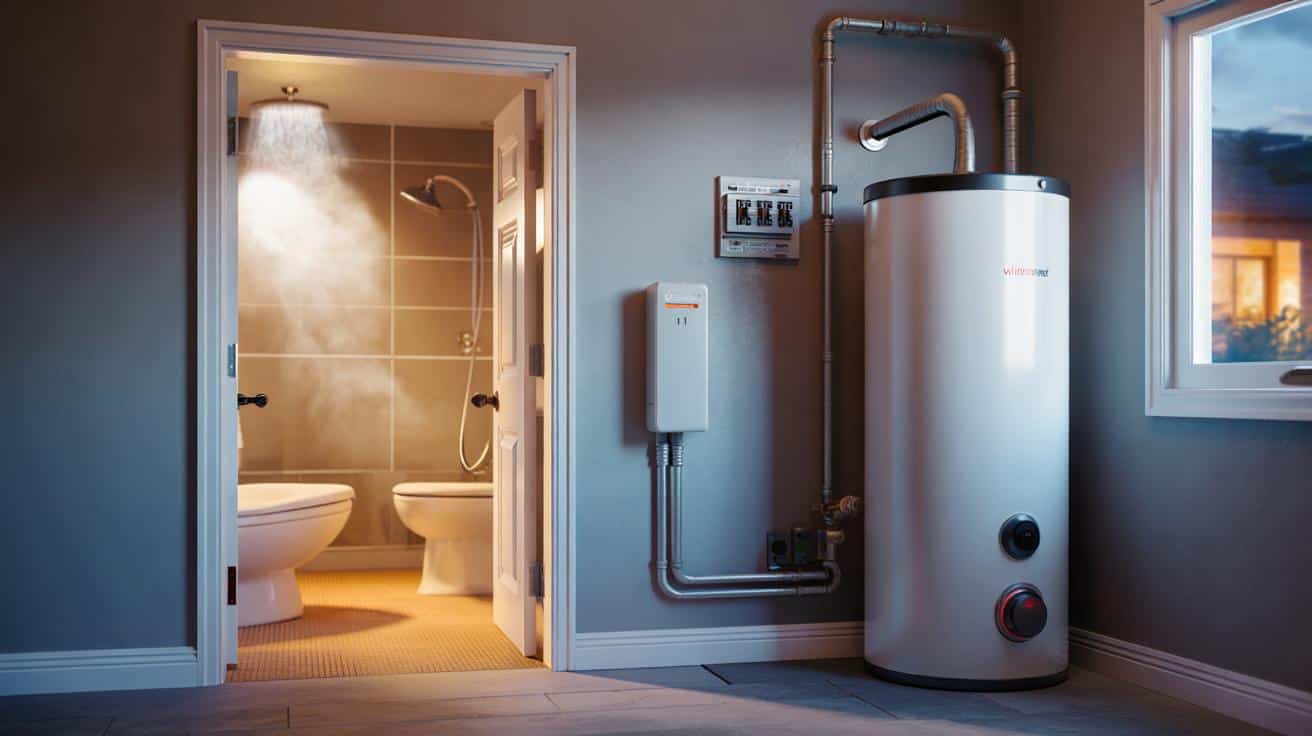
The device gaining attention is essentially a dedicated programmer, sometimes called a hot water timer or controller. It sits between your electrical panel and the water heater and serves as a strict gatekeeper.
Its job: allow electricity through only during the heating windows you’ve chosen.
This little box doesn’t heat water – it decides when water is allowed to be heated.
➡️ 4 Olivenöle, die man besser nicht kauft: 60 Millions de consommateurs schlägt Alarm
➡️ Das mache ich seit Jahren: Meine Fenster bleiben streifenfrei dank dieser Küchenzutat
➡️ No more gaping holes after removing a wall plug: the trick that restores your wall without a trace
➡️ Heating off at night: money-saving trick or costly mistake?
➡️ Was bedeutet es laut Psychologie, wenn jemand andere ständig unterbricht?
By doing that, it tackles three big sources of waste:
- Heating water when the house is empty
- Maintaining high temperature all night without need
- Running outside cheaper tariff periods, when applicable
How the programmer actually works
The principle is simple but effective. Inside the box, a relay acts like a remotely controlled switch. The timer, mechanical or digital, tells this relay when to close the circuit (power on) and when to open it (power off).
When the relay is closed, your water heater behaves normally, raising the tank to its target temperature. When it’s open, the heater is cut off from the mains, even if its own thermostat asks for more heat.
Most modern programmers let you create different daily schedules, for weekdays and weekends for example. Some connected models can be adjusted from a smartphone, handy if your plans change or you go away unexpectedly.
Why households are installing these devices
The attraction is partly financial, partly practical. Used sensibly, a programmer can reduce the running time of a water heater by several hours a day without you noticing at the tap.
Targeted heating windows let you keep the same shower temperature while shrinking the number of hours your heater is actually on.
Typical benefits include:
- Lower electricity usage: the tank is heated once or twice a day rather than constantly topped up.
- Better use of off‑peak tariffs: you can align heating with cheaper hours even if your heater doesn’t natively support them.
- Less wear on components: fewer heating cycles can extend the life of the element and thermostat.
- More control: you decide when hot water is prepared instead of letting the heater run on autopilot.
The device becomes particularly attractive for people who are often out during the day, or for second homes. There is little logic in keeping a tank piping hot in an empty house.
Installation: what actually happens at your fuse board
Before rushing to buy a programmer, the first step is to check how your water heater is wired.
- Plug-in heater on a standard socket: using a cheap plug‑in timer for a powerful heater is usually a bad idea. These heaters often draw 2,000–3,000 watts or more, which can overload basic devices.
- Heater wired directly to the electrical panel: this is the ideal setup. A dedicated circuit with its own breaker makes it straightforward for an electrician to add a proper, robust programmer.
Once the wiring situation is clear, you can choose the broader type of device:
- Mechanical timer: an analogue dial with pins. Simple, cheap, and often enough for regular routines.
- Digital programmer: allows precise schedules, multiple daily periods, and holiday modes.
- Connected controller: can be managed via app, sometimes integrates with smart home or energy management systems.
The critical specification is maximum power or current. A domestic electric tank often sits between 2 kW and 3 kW, so the programmer must comfortably handle that load with a safety margin.
Typical setup for a family of four
One common configuration is to heat water in two main windows:
- Early morning: to cover showers and breakfast
- Early evening: to cover washing up and late showers
In many cases, running the heater for a total of three to four hours a day is enough to maintain a full tank at the required temperature, depending on insulation and usage.
Many households find that their heater doesn’t need to run all day to deliver hot water all day.
Extra steps that boost the box’s impact
The programmer works best when combined with other simple measures that reduce how quickly your tank loses heat or how much hot water you use.
- Set the thermostat around 55–60 °C (131–140 °F): this is typically hot enough for comfort and hygiene while limiting energy use and limescale.
- Descale the tank every 2–3 years in hard water areas: limescale on the heating element acts like insulation, forcing it to stay on longer.
- Fit low‑flow shower heads and tap aerators: they mix air with water, so you use less hot water without feeling a trickle.
- Insulate hot water pipes, especially in unheated spaces like garages or lofts.
- Use an eco shower routine: a few minutes less under the spray has a direct effect on tank refills.
What the savings can look like in real life
Exact numbers vary, but energy agencies in Europe estimate that smarter control of electric water heating can shave double‑digit percentages off hot water electricity use.
| Household profile | Heater usage without programmer | Heater usage with programmer | Potential effect |
|---|---|---|---|
| Couple in flat | Heater on almost 24/7 | 2–3 hours per day | Noticeable cut in hot water portion of bill |
| Family of four | Frequent reheating across day | Morning + evening windows | Reduced peak demand, better match to off‑peak tariffs |
| Second home | Heater left on between visits | Programmable holiday/absence mode | Large savings between stays |
In practice, many users report that once the schedule is well tuned, they hardly ever notice the difference – except on their monthly statement.
Risks, limits and when to call a professional
There are a few caveats. Poor-quality or undersized timers can overheat. That is why matching the programmer’s rating to your heater’s power is non-negotiable. Any sign of melting plastic or unusual warmth around the device is a red flag.
In some regions, regulations restrict who can work inside the electrical panel. Even if DIY is permitted where you live, water heaters draw enough current to justify a cautious approach. A certified electrician will install the programmer on the correct circuit, set up protection devices, and check that the earth connection is sound.
There is also a comfort balance to strike. Set the heating windows too short and you may run out of hot water on days with back‑to‑back showers or laundry. Most people need a couple of weeks of adjustment to find the sweet spot between comfort and savings.
Going further: from one box to a smarter home
For households already interested in energy management, the water heater programmer can be the first step towards a more coordinated system. Connected versions can sync with solar panels, charging the tank when rooftop production is high, effectively turning hot water into a thermal battery.
Others can communicate with smart meters to respond to dynamic tariffs, pushing heating to hours when the grid is cheaper or cleaner. Combined with basic insulation and mindful hot water use, this simple box becomes part of a broader strategy that cuts bills and reduces pressure on the power network without sacrificing hot showers.