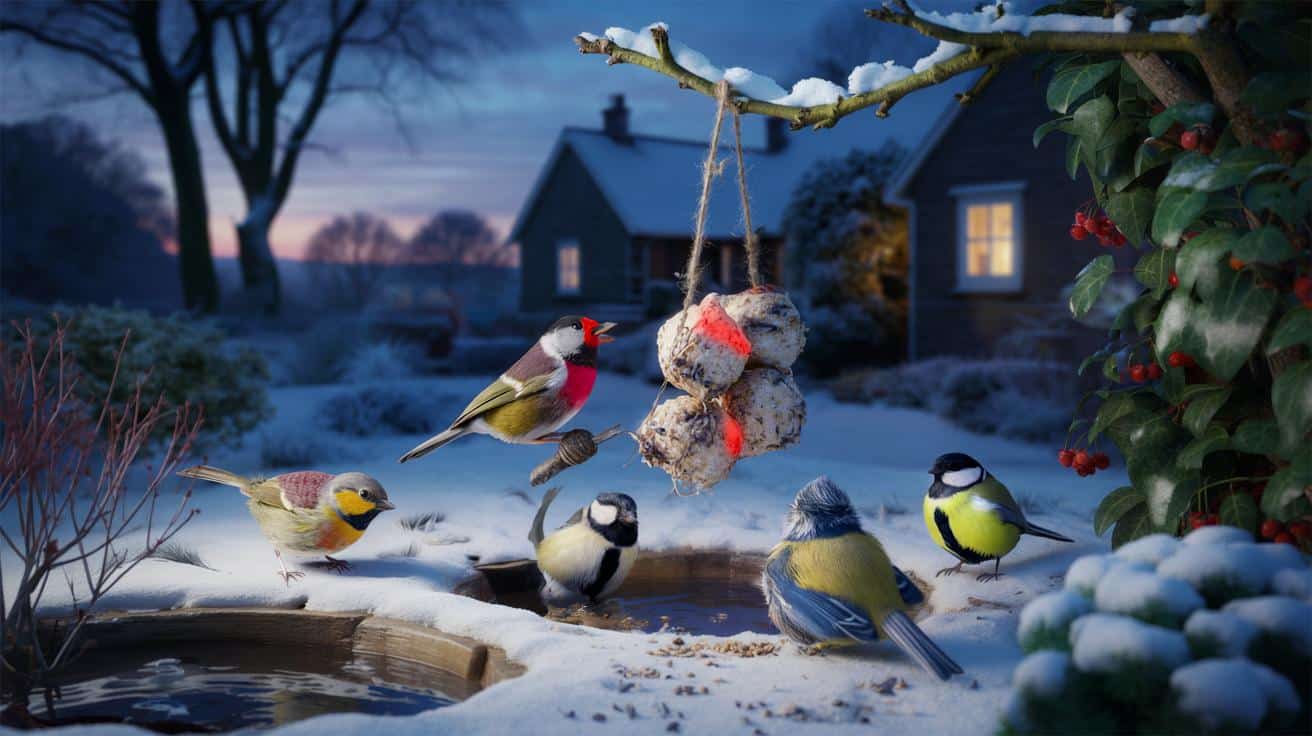
Across Britain and much of Europe, winter nights are getting longer, sharper and more unpredictable. For garden birds, that means hours of darkness with almost no chance to feed, all while their bodies burn through energy at a frightening rate just to stay warm. Many people want to help, yet the food we instinctively offer is often not what these birds actually need to make it through until dawn.
Why icy nights are so hard on small birds
A robin or blue tit looks fluffy under a layer of feathers, but underneath that down is a body weighing barely a few grams. That tiny mass must stay at roughly 40°C throughout the night, even when the air drops well below freezing.
To manage this, birds crank up their internal “furnace”. Their metabolism speeds up, burning through fat reserves at a dramatic pace. A cold, windy night can consume most of the energy a small bird managed to store during the day.
Each winter night is a race between how much energy a bird has saved and how fast the cold takes it away.
Once the sun sets, the ground cools rapidly, insects vanish and many natural food sources become locked under frost or snow. Even after a bright winter’s day filled with foraging, that daytime intake is rarely enough to comfortably cover the long stretch of hours ahead.
If a bird goes to roost slightly underweight, or if a cold snap is harsher than expected, the margin between survival and fatal hypothermia can be razor-thin.
The well-meant mistake: foods that do more harm than good
Wanting to help, people often reach for whatever they have at home. Bread crusts, bits of cake, leftover chips, even flaky pastries often end up on garden walls or window ledges.
It feels generous, but for birds in deep winter, this approach falls short. Bread in particular fills the stomach without offering real value. It expands, gives a brief feeling of satiety, yet delivers limited usable energy and almost no vital fats or micronutrients.
Processed leftovers are worse. Salty snacks, cured meats, or sweet bakery products can expose birds to:
➡️ Flughafenmitarbeiterin verrät den Trick, damit Ihr Koffer als Erster aufs Band kommt
➡️ Experten warnen: Das bedeuten diese Löcher in Ihrem Garten – und warum Sie wachsam bleiben sollten
➡️ Achtung Autofahrer: Warum Sie einen 50-Euro-Schein an der Windschutzscheibe niemals anfassen sollten
➡️ 5 psychologische Anzeichen, um eine schädliche Person schnell zu erkennen
➡️ Dieser alte Lorbeer-Trick ist zurück: Warum man ihn laut Fachleuten an die Tür hängen sollte
- Excess salt, which their kidneys struggle to handle
- High sugar levels that destabilise their metabolism
- Additives, flavourings and fats designed for human digestion
Well-intentioned feeding can backfire when the food is bulky, sugary or salty instead of dense, clean energy.
Birds need something that packs power into every peck, without the hidden risks that come with human junk food.
The single best winter booster: unsalted fat
Among all possible foods you can set out on a freezing night, one stands out as a clear winner: plain, unsalted animal fat.
That can be tallow, suet, lard, beef dripping or unsalted butter. The key is that it must be free from salt, spices and seasoning. In that simple form, it becomes a life-saving resource for winter birds.
Unsalted fat is like a hot-water bottle in food form: small birds turn it directly into warmth.
Fat is extremely energy-dense. Gram for gram, it contains more than twice as many calories as carbohydrates or protein. Birds can process it quickly and efficiently, using it to fuel their internal “heaters” all through the night.
Where a handful of bread might just blunt a hunger pang, a properly prepared fat ball can fill their reserves with slow-burning fuel. That means more chance of waking up at first light with enough strength left to start foraging again.
Why sugar and salt are such a problem
It is easy to think that sugary foods give a helpful energy kick. For birds, that short spike comes at a cost. Their digestive system is not built to handle large amounts of refined sugar. The surge of quick energy fades fast, leaving them without the sustained warmth they need until dawn.
Salt is even more dangerous. Small birds have tiny bodies and very limited capacity to process sodium. What feels like a light sprinkle to a human can push them into serious trouble.
Salt and sugar create quick highs and heavy strain, when birds actually need steady fuel and low stress on their organs.
By choosing plain, unsalted fat, you offer something very different: a stable, long-lasting fuel that supports their natural thermoregulation instead of disrupting it.
How to prepare safe winter fat for birds
You do not need specialist equipment or expensive products. A simple, kitchen-based recipe works well and lets you control every ingredient.
Basic homemade fat mix
| Ingredient | Quantity | Notes |
|---|---|---|
| Unsalted animal fat (suet, lard, beef dripping, unsalted butter) | 200 g | Must be completely unsalted and unseasoned |
| Mixed seeds (sunflower, millet, oats, crushed peanuts) | 100 g | Plain, no salt or flavouring |
Gently melt the fat on low heat until it becomes liquid. Take it off the hob, stir in the seeds, then pour the mixture into small containers such as empty yoghurt pots, coconut shells, or moulds.
Allow it to cool and harden fully at room temperature or in a cold shed. Once solid, you can hang the pots, tip the blocks out into feeders, or shape the mixture into balls using garden twine or reusable mesh.
Let the mixture set completely before putting it outside, so it holds together when birds land on it.
Where and how to place the feeders
Position matters almost as much as the recipe. Good placement reduces stress and risk for your visitors.
- Hang fat balls or blocks high enough to be out of reach of cats
- Choose a spot sheltered from the worst wind and driving rain
- Avoid strong midday sun that might soften or melt the fat
- Spread several feeding points around the garden to reduce fighting
Having multiple small stations makes it easier for timid species to grab a meal without being chased off by more dominant birds.
Turning your garden into a winter refuge
Fat feeding is a powerful step, but the wider setting can make your help much more effective. A garden that offers shelter, cover and a little water becomes a real refuge in harsh weather.
Simple measures can change the picture:
- Leave a patch of shrubs, ivy or brambles untouched for roosting cover
- Put up nest boxes or roosting boxes facing away from prevailing winds
- Provide a shallow dish of fresh water and break the ice on frosty mornings
- Plant berry-bearing bushes such as hawthorn, holly or rowan for natural winter food
A small, scruffy corner of garden can be worth more to birds than a perfectly manicured lawn.
Neighbourhood efforts amplify the effect. If several homes on a street all put out safe fat mixes and maintain trees or hedges, the area starts to function as a corridor of safe stops for birds struggling through the cold.
What changes when birds get enough fat at night
When regular, good-quality fat is on offer during cold spells, the difference in bird behaviour becomes visible. Birds arrive at feeders more alert, with smoother plumage and brighter movements. They linger less on the ground, where predators are a threat, because they can refuel quickly and efficiently.
Over a full winter, this extra support can mean higher survival for familiar species like robins, blue tits, great tits and house sparrows. That matters for local ecosystems and for the simple pleasure of sharing our gardens with them in spring.
One small change in what you feed can tip the balance between a silent garden and a lively dawn chorus in March.
Practical scenarios: when and how much to feed
Imagine a clear January night with temperatures forecast to drop well below zero. On such evenings, putting out fresh fat in the late afternoon gives birds time to find and use it before they settle to roost.
During milder spells, you can reduce the amount slightly, keeping an eye on how fast it disappears. Leaving huge amounts out for days can lead to spoiled, rancid fat, which is less appealing and potentially harmful. Small, regular portions keep things fresh and safe.
Fat feeding pairs well with other foods such as sunflower hearts, nyjer seeds and a modest amount of oats or crushed, unsalted peanuts. This mix supports a wider range of species, from finches to tits and thrushes, while still centring fat as the key night-time energy source.
Key terms and small risks to keep in mind
You may come across the term “suet” on commercial packaging. In simple terms, suet is a hard animal fat, usually from beef or mutton, that stays solid at room temperature and is perfect for bird cakes, as long as it is plain and unsalted.
There are a few risks worth avoiding. Do not offer melted or runny fat, which can coat feathers and reduce their insulating power. Skip leftover roasting tray fat, which may contain salt, meat juices and cooking residues. And avoid string nets that can tangle small feet; rigid fat-ball cages or drilled logs filled with fat mix are safer alternatives.
Handled with these precautions, unsalted fat becomes a powerful winter ally. It supports each night’s struggle for warmth and gives birds a better shot at greeting the first light, wings ready, rather than falling short just before morning arrives.