As gas and electricity bills rise on both sides of the Atlantic, the humble thermostat turns into a strategic tool rather than a forgotten box on the wall. Used well, it can quietly shave hundreds off annual costs. Used badly, it burns through money while your home still feels oddly uncomfortable.
Cranking the thermostat up doesn’t heat your home faster
One of the most stubborn winter myths is that setting the thermostat very high makes the house warm up more quickly. It doesn’t. Your boiler or heat pump runs at the same power; the thermostat simply tells it when to stop.
Turning the dial from 20°C to 25°C doesn’t speed up heating – it only keeps the system running longer and risks overheating the home.
The result: you overshoot your comfort temperature, then open a window or turn radiators off by hand. That wasted heat is effectively cash floating out into the winter air.
The right way to reach a comfortable temperature
- Set a realistic target – usually around 19–20°C for living areas.
- Allow a little time for the system to work; most homes need 30–60 minutes.
- Use timer or schedule functions so heat comes on before you wake up or get home.
In well-insulated homes, aggressive temperature swings are rarely needed. Consistent, moderate settings give better comfort and lower bills.
Keeping the same temperature all day costs you dearly
Some households leave the thermostat at one fixed temperature 24/7, thinking stability saves energy. In reality, heating empty rooms for hours is a silent budget leak.
When you’re out at work, away for the weekend, or asleep under a duvet, your body needs less warmth from the building itself. Maintaining the same daytime temperature during those periods simply feeds the meter.
Allowing the temperature to drop a few degrees when you’re away or asleep often cuts annual heating use by 10–15% without harming comfort.
Smart temperature “zones” through the day
A simple daily pattern can drastically reduce waste:
➡️ Wie du eine verbrannte Pfanne mit einer Chef‑Methode auf Salzbasis rettest
➡️ Help Birds Survive The Coldest Nights: The One Food That Brings Their Warmth Back
➡️ Achtung Autofahrer: Warum Sie einen 50-Euro-Schein an der Windschutzscheibe niemals anfassen sollten
| Time period | Suggested temperature (living areas) |
|---|---|
| Morning (before leaving) | 19–20°C |
| Daytime (away from home) | 16–17°C |
| Evening (at home) | 19–20°C |
| Night (sleep) | 16–18°C |
Even with a basic programmable thermostat, setting these four phases can take less than 10 minutes and pays back on the first winter bill.
Turning the heating off completely can backfire
At the other extreme, some people switch the heating off entirely when leaving the house, aiming for maximum savings. In cold spells, this can have side effects.
If the indoor temperature drops too low, walls and furniture cool right down. When you turn the system back on, the boiler must work hard for longer to bring the whole structure of the building back to a comfortable level. The house can feel clammy and slow to warm.
Letting a property fall to near outdoor temperatures raises the risk of condensation, damp patches and even frozen pipes in harsher climates.
A reduced “frost protection” or setback setting – usually around 14–16°C – keeps the shell of the home from plunging into the cold zone while still saving energy.
Bad thermostat placement confuses the system
Many heating problems begin not with the boiler, but with where the thermostat sits. Mounted in direct sunlight, above a radiator, behind a curtain or near a draught, it reads a distorted version of reality.
If the sensor believes the room is warmer than it really is, it will cut the heating early. You end up with chilly corners and a mysterious feeling that “the heating never quite works right”. Put it in a cold draught and the opposite happens: the system runs longer than needed, overheating the rest of the home.
Where the thermostat should go
- On an interior wall, away from direct sunlight.
- Roughly 1.5 metres off the floor, near the centre of the home.
- Far from doors that open frequently to the outside.
- Not hidden behind furniture, curtains or bookcases.
A simple relocation can transform comfort levels without touching the boiler settings.
Ignoring smart features is a missed opportunity
Many households now have a smart thermostat installed by default, but only use it as a glorified on/off switch. That leaves powerful money-saving features dormant.
Scheduling, presence detection and consumption tracking are often worth more over a winter than the upfront cost of the device itself.
Smart tricks that actually lower bills
- Learning schedules: Some devices track when you’re usually home and adjust heating times automatically.
- Geolocation: The app on your phone can tell the system you’re out, lowering the temperature a notch until you’re on your way back.
- Usage reports: Weekly energy summaries highlight patterns, such as late-night heat you never notice but still pay for.
- Room-by-room control: Smart valves on radiators let you target heat where it matters most.
Used thoughtfully, those tools bring precision to what used to be guesswork with a dial on the wall.
Not every room needs the same temperature
Heating a hallway to the same level as a living room rarely makes sense. Bedrooms can be cooler, and some rooms may barely need heating at all.
Lowering the thermostat just 1°C across the home can cut heating use by roughly 5–7%, depending on the building and system.
Typical comfort ranges in winter are:
- Living room, kitchen: 19–20°C.
- Bedrooms: 16–18°C.
- Bathroom during use: around 21–22°C, lower outside shower times.
- Hallways, storage rooms: 15–17°C.
Thermostatic radiator valves or smart radiator controls make these variations easy without complicated rewiring.
Good habits that maximise your thermostat’s impact
Thermostats can only work with the home they’re in, so some basic maintenance and building habits go hand in hand with good settings.
- Bleed radiators once or twice a season so they heat evenly.
- Service boilers and heat pumps according to the manufacturer’s timetable.
- Close curtains at night to cut heat loss through glass.
- Block obvious draughts around doors, letterboxes and loft hatches.
These simple measures mean the thermostat’s job is to fine-tune comfort, not fight constant heat loss.
What kind of savings are realistic?
Energy agencies across Europe and North America tend to agree on one rough rule: a 1°C reduction in indoor temperature can trim heating energy by several percentage points. Over a long winter, that stacks up.
For a typical medium-sized home, combining modest temperature cuts with scheduling often shaves £150–£300 or more from annual heating bills, depending on tariffs and insulation.
Consider a three-bedroom house that usually sits at 21°C all day. Dropping to 19–20°C in living spaces, 16–17°C at night and when empty, then sealing basic draughts, can reduce energy consumption by hundreds of kilowatt-hours across a season.
Two winter scenarios: wasteful vs. optimised
Scenario 1: the “always on” household
The thermostat stays at 21°C, day and night. The family leaves for work and school from 8am to 6pm, but the heating keeps every room cosy. The house never feels cold, yet the bill in January comes as a shock.
Scenario 2: the “smart schedule” household
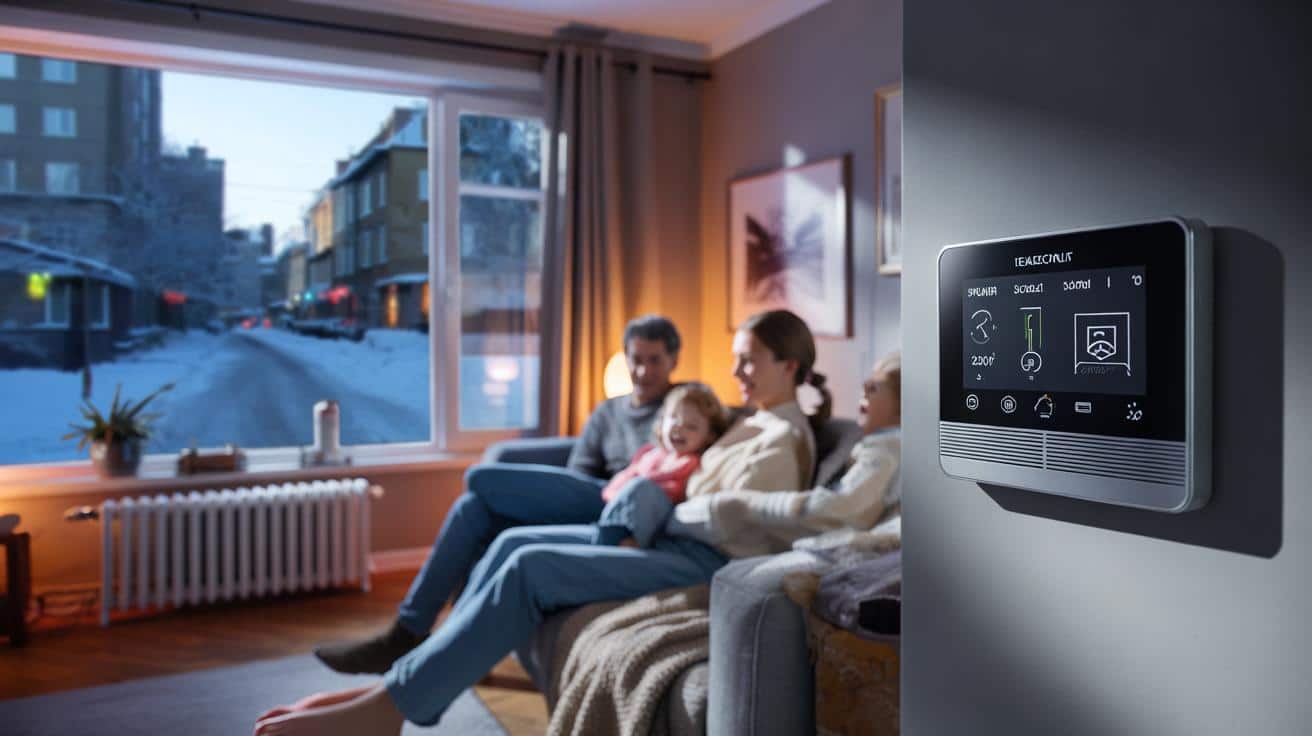
Same family, same house. They set 20°C in the evening, 19°C in the morning, and 16–17°C when the home is empty or at night. The thermostat is on an interior wall, not in direct sun. A smart app trims heating when everyone’s phones are away from the house.
End result: the family barely notices the difference in day-to-day comfort. The meter and bank balance notice a lot.
Key terms that make bills easier to understand
Two technical ideas shape how your thermostat affects costs: “setpoint” and “heat loss”. The setpoint is simply the temperature you ask for. Heat loss is how quickly warmth escapes through walls, windows, roof and floors, as well as from draughts.
A lower setpoint means less heat needs to be added to offset the constant losses, so the boiler or heat pump runs for shorter periods.
In older, draughty buildings, dropping the setpoint by just a couple of degrees can dramatically reduce boiler runtime. In newer, well-insulated homes, the gains are still real, but the building holds heat so well that comfort remains stable even with more assertive schedules.
Seen this way, a thermostat isn’t just a comfort gadget. It’s the control panel for how your home trades energy, money and warmth through the cold months. Used with a bit of strategy and curiosity, that small plastic box can do far more than just click on and off.